
A significant contract is won by an industrial manufacturer. While the requirements for monthly production have grown, the plant isn’t suddenly equipped with more area for floor or skilled workers. A temporary increase in production may be possible, but adding another shift can introduce new labor requirements education, supervision, training and quality control.
These examples show an important motive for the use of robotic automation. Robotics doesn’t just replace humans with machines. A good application could change the way that manufacturers use their capacity to produce.
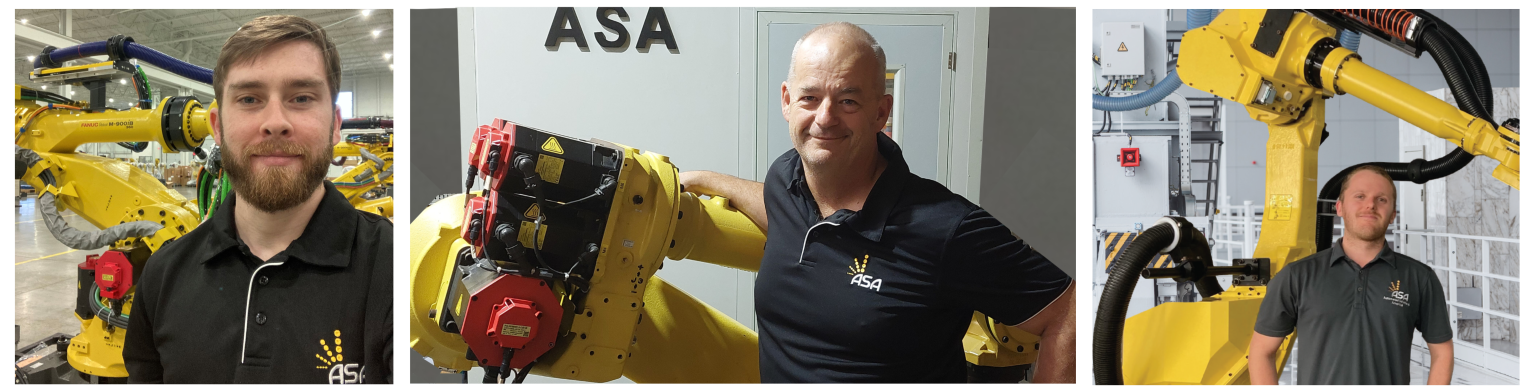
Image credit: automatedsolutions.com.au
Have a look at the seconds that disappear between products
Manufacturing inefficiency doesn’t need to be a major issue. An operator may spend 15 minutes putting the part in place before implementing 10 seconds of materials, and a few more seconds moving it onto the next stage. On one piece the difference appears to be insignificant. If repeated thousands of times, these seconds can turn into important production times.
Same goes for waste material. A tiny amount of leftover coating or dispensing material multiplied throughout a production run that is high-volume could be a substantial expense.
Companies that are thinking about robotic automation Australia will gain by analyzing these tiny routine losses before they decide on the best equipment to buy. ASA’s needs analysis is designed to pinpoint bottlenecks, problems with quality, waste as well as other limitations to process that can affect an automation project.
A Robot Must Fit the Process Around It
A robot is one of many engineering decisions. The system might also require tooling, guarding devices, controls fixtures, conveyors electrical integration, and communications with existing production equipment. Engineers should consider reach and payload when determining how the robot will move about its work area and interact with everything surrounding it.
ASA provides concept development, system design, CAD simulation, and offline programming as part of its approach to FANUC robotic automation. Engineers can investigate system configurations and estimate cycles before the finished system is installed on the floor of the factory. This is particularly useful when there are space constraints or if new robotics need to be integrated with the existing lines of production.
Dispensing and painting demonstrate why Replicability is Essential
Certain manufacturing processes highlight the importance of controlling movements. Imagine coating hundreds or thousands of parts. The end goal isn’t simply finishing each part quickly. The motion, distance, speed, and application have be managed from the start of the production process until the end.
ASA is a team of experts working with dispensing applications and paint across various industries, such as automotive and aeronautics. In these industries, industrial robotic automation can provide repeatable, programmed movements and decreases the risk of exposure for employees to physically challenging or potentially dangerous processes.
The elimination of waste and the increase of productivity can be accomplished by better control.
Even after the installation it still needs people
Automation doesn’t remove the need for manufacturing expertise. Automation transforms the skills required to maintain and operate the manufacturing process.
Employees must be able to safely operate equipment be aware of abnormal behavior as well as troubleshoot issues and perform appropriate maintenance. Programs and processes can be adjusted later if production requirements change.
ASA offers on-site training that covers programming, safety, troubleshooting and mechanical and electrical maintenance. The company provides servicing and assistance for assessing equipment condition, and addressing wear and tear throughout the life of the system.
Capacity is about more than Working Faster
An increase in capacity for Australian manufacturing companies doesn’t mean buying a bigger building or adding more labor on repetitive processes. It’s often better to inquire if the manufacturing process can be modified.
ASA has been designing and integration of automation solutions since 2002. It works with manufacturers in Australia as well as international projects. Its approach combines needs analysis, engineering simulation, FANUC integration along with training and servicing.
Automation is not just for the sake of automation. A system that is worthy of its weight in gold should bring tangible benefits to manufacturers, for example better production reliability, better quality methods, less risky processes, and less waste.